One class
50-60 minutes
Free Chapter One onlyStudents separate machine performance from institutional choices, close-read David’s final working day, and make an evidence-based claim.
For high school, college, medical, and health-professions education
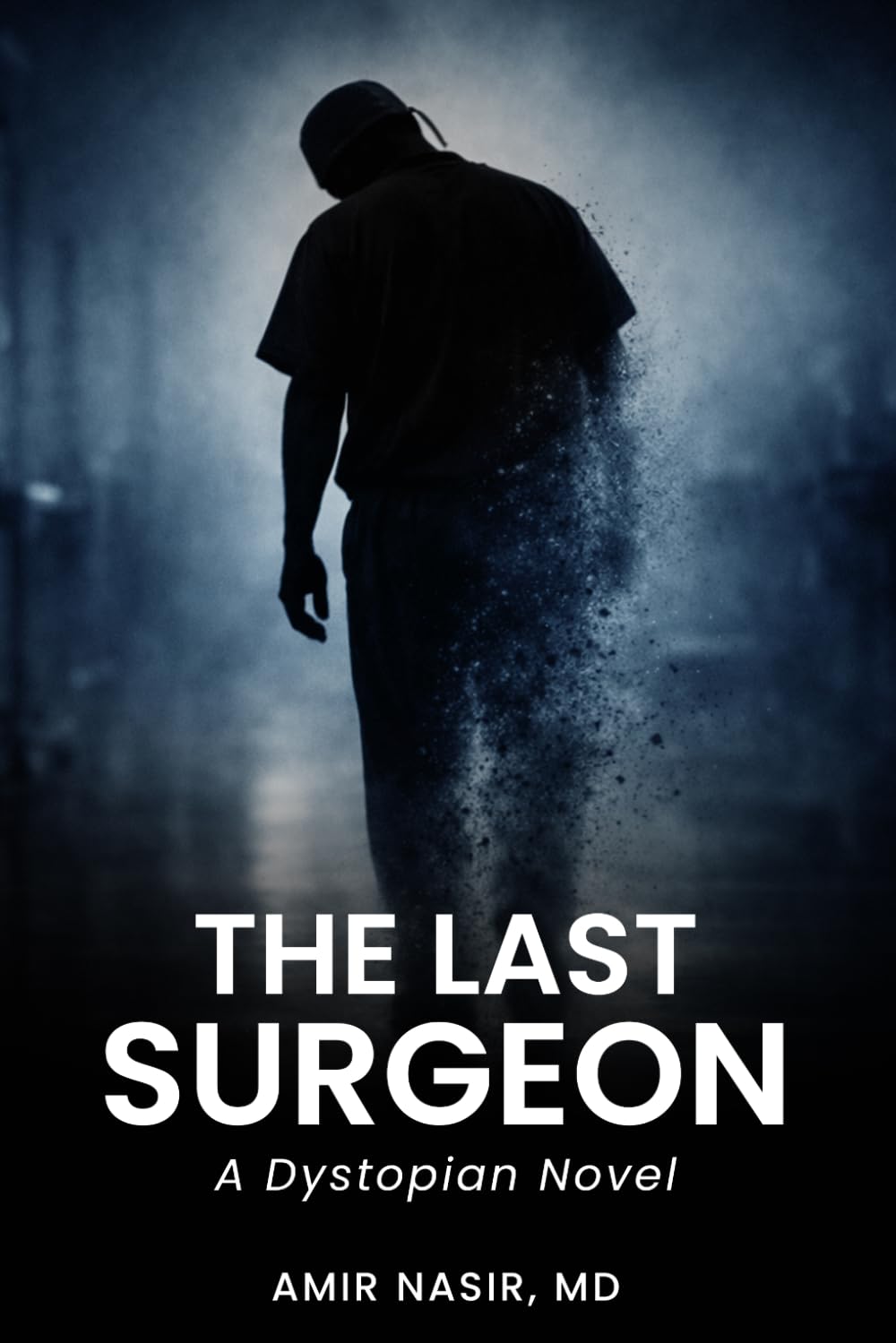
A 150-page medical dystopia about what happens when AI and robotics diagnose illness, perform surgery, and treat patients better than people. What becomes of human expertise, identity, purpose, and connection when even our most demanding work can be automated? Ready-to-teach materials are available for one class, one week, or two weeks.
Ready-to-teach options
Each route includes a defined reading assignment, class plan, student task, and final product. Public materials include no answer key.
50-60 minutes
Free Chapter One onlyStudents separate machine performance from institutional choices, close-read David’s final working day, and make an evidence-based claim.
Five classes
The complete novel in five reading blocksFive lesson plans move from professional identity and scarcity to automated surgery, constrained choice, winners and losers, and the epilogue.
Ten classes
The complete novel in shorter blocksThe longer unit adds close reading, an evidence tracker, a hospital-board hearing, assessment choices, and a grading rubric.
The central idea
Surgery combines compassion, broad knowledge, technical skill, judgment, and the ability to adapt quickly when a life is at stake. As AI gains the ability to reason and robotics gives it the ability to act, the novel uses one of the most demanding human professions as a stress test for every claim that a job is too physical, too complex, or too human to automate.
Classroom downloads
Start with the short lesson or use the complete kit for a full-novel unit. The slide deck is editable, and the original two-page guide remains available as a quick overview for departments and curriculum committees. The materials can be adapted for high-school classes, college seminars, medical-school teaching, and other health-professions or interdisciplinary programs.
Why it works in class
AI is already changing knowledge work. Robotics gives AI the ability to act in the physical world. Together they raise more difficult questions: What happens to people when work that gave their lives purpose no longer needs them? Are humans still needed to care for one another at their most vulnerable when machines do the job better? What will patients sacrifice or pay to preserve human connection?
Learning objectives
Discussion questions
Classroom activities
Represent patients, clinicians, hospital leaders, insurers, the technology company, or the community. Recommend deployment terms, answer objections, and vote publicly.
Choose a profession commonly described as safe from AI. Compare its knowledge, physical skill, judgment, adaptability, emotional labor, and liability with surgery.
Trace money, risk, authority, data, and accountability from the first budget crisis to the eCEO. Mark where individual decisions become a system no one person controls.
Identify what the robot teacher gets right about human surgery, what context is missing, and how those omissions shape the children’s moral judgment.
Classroom and institutional inquiries
Virtual author discussions may be available for classrooms, book clubs, and student groups. For teaching, appearance, or classroom-ordering questions, contact the author.
Content note
Occasional strong language; discussion of suicide and job-related despair; illness, death, surgery, and medical injury; and themes of economic collapse and job loss. Recommended for upper high school, college, and adult learners. Educators should review the text for their own setting.